meetsensor distributes a full range of products including German Leuze deflecting mirrors, ensuring that they are brand new, original and authentic. We can provide product model pictures, parameters, technical data and official information.
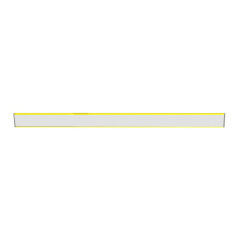
Leuze deflecting mirror from Germany UM60-1050 Product Details:
Deflecting mirror /Single mirror
The continuous mirror is suitable for beam deflection in safety light curtains such as the MLC and ELC series. The narrow and robust housing is equipped with a slide or a rotatable bracket for easy installation.
Deflecting mirror /Equipment protection column
Safety applications sometimes require the sensor beam to be deflected depending on the building conditions. Deflecting mirrors and deflecting mirror cylinders enable multi-directional protection of hazardous areas at low cost.
Sturdy machine guarding columns allow our MLC safety light curtains and MLD multiple-beam safety light grids to be independently mounted on the floor. They also facilitate the fixing of muting mounting systems.
With the DC and UDC device protection columns, MLD multiple light beam safety devices and MLC safety light curtains can be easily and independently mounted. UMC mirror columns are used for multi-sided access protection structures. The continuous mirror surface is suitable for beam deflection of safety light curtains such as the MLC and ELC series.
MLC safety light curtains and MLD multi-beam safety light grids are independently installed on the ground, with multi-sided entrance and exit protection structures.
Leuze is an international sensor specialist in automation technology. With their curiosity and determination, our sensor experts have been committed to innovation and creating milestones in industrial automation technology for more than 60 years.
Founded in 1963, Leuze is headquartered in Owen/Teck in southern Germany. Today, more than 1,200 sensor experts from Leuze's 6 production bases and 21 sales subsidiaries, with rich experience and firm commitment, and with the full support of more than 40 international distributors, ensure that customers can achieve long-term success in the ever-changing market.
Leuze development history:
1963 The innovative history of Leuze began with the founding of the Leuze Textile weaving factory in Owen/Teck in 1963. There, six people developed the first Leuze electronic sensors.
1960s Developed Leuze's smallest reflection probe, RK 06/1, and entered the printing industry.
1970s The result is the first Leuze retro-reflective photoelectric sensor RK18, which is suitable for use under the most adverse environmental conditions, for example in brickworks or the timber industry.
For the first time, the pulling cables in warehouse logistics are replaced by contactless data transmission. This is when the first data transmission light barrier is born: the Leuze DDLS 78.
1980s The development of the PRK 72, the first retro-reflective photoelectric sensor with contactless reflective head, enabled Leuze to enter the packaging industry and soon also the beverage filling sector.
Leuze develops polarization filters for distinguishing transparent objects. Leuze transfers this expertise to other applications such as labeling machines, for which it develops the first label recognition fork, the GS 5.
An important milestone was the development of the SLS 89, the first safety light grid for access protection. It was with this product that Leuze began to develop into a specialist for safety products and services.
1990s Leuze first develops a laser scanner based on the triangulation principle. The RS 2 is born. Leuze's first barcode positioning system BCL 21 and the smallest industrial barcode reader BCL 8 are also born. Based on its safety and protection expertise, Leuze develops the SRK 96, the first safety reflective light grid from Leuze that can achieve access protection with only one-sided wiring.
Early 21st century Leuze further strengthens its safety and protection expertise and develops the first TOF laser scanner RS 4 in measurement and safety models. Leuze also creates the AS-Interface communication protocol and becomes a founding member of the user organization and the IO-Link Alliance.
This is followed by another first in the field of fork sensors: The GSU 14 is the fastest and most accurate fork sensor for label recognition from Leuze. It also uses a completely new detection principle: ultrasound.
2010s The BCL 300i sets a further technological milestone as the first barcode reader that does not require an additional gateway, while the CML 700i is the fastest-responding light curtain from Leuze.
The further development of the Leuze RS 4 safety and protection product is the RSL 400 safety laser scanner, which features the largest detection range, two independent protective functions: It is available in different versions and can be networked using Profinet.
Smart process gating is based on our MLC 530 safety light curtains and enables innovative access protection for conveyor paths without the use of muting sensors.
2020s With the DRT 25C, which is based on new benchmark technology and the comparative adaptive teach-in CAT, Leuze has created a completely new operating principle in the field of switch sensors.
For labelling machines, Leuze combines the two detection principles of light and ultrasound in one compact sensor and develops the GSXU 14E combined fork sensor, which was the first photoelectric fork sensor and later became the first ultrasonic fork sensor.
Similar models:
US 60-150W US 60-450 W US 60-1248 W UM60-1800 UM60-1650 UM60-1500 UM60-1350 UM60-1200 UM60-1050 UM60-900 UM60-750 UM60-600 UM60-450 UM60-300 UM60-225 UM60-150