As a critical connection component in industrial automation, environmental monitoring, and IoT systems, the sealing and moisture-proof performance of sensor junction boxes directly affects measurement accuracy, equipment lifespan, and system reliability. Particularly in high-humidity or water-immersed environments such as outdoor installations, underground utility tunnels, chemical workshops, and offshore platforms, moisture ingress can lead to terminal oxidation, short circuits, insulation degradation, and even signal drift. The following systematically elaborates on sealing and moisture-proof measures for sensor junction boxes from four dimensions: material selection, structural design, process treatment, and operation-maintenance management.
I. Sealing Materials and Filling Technologies
1. Elastomeric Seals (O-Rings / Gaskets)
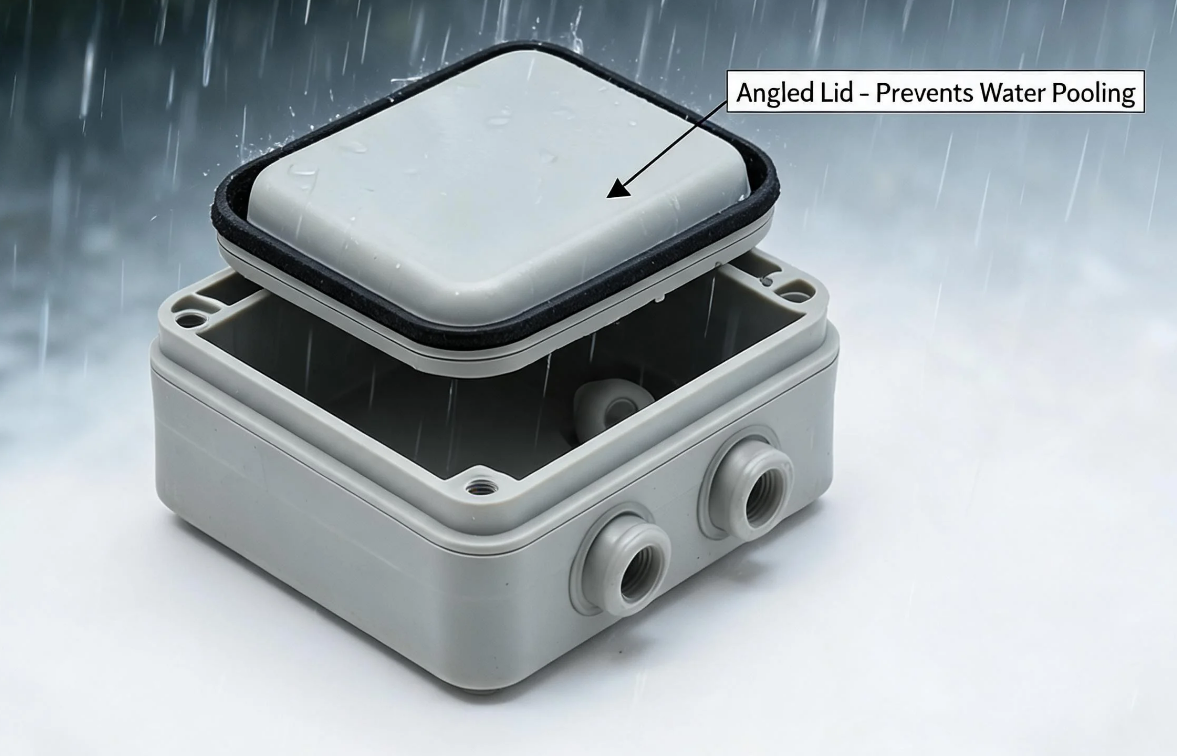
The junction between the junction box cover and body typically employs rubber or silicone O-rings to achieve face sealing. Material selection must balance temperature resistance, chemical corrosion resistance, and compression set: Fluorocarbon rubber (FKM) is suitable for high-temperature oil mist environments; Ethylene Propylene Diene Monomer (EPDM) exhibits excellent ozone and aging resistance; Silicone rubber (VMQ) maintains elasticity across a wide temperature range (-60°C to 200°C). During installation, compression ratio must be controlled (generally 15%–30%) and groove design employed to prevent extrusion failure.
2. Potting and Encapsulation Technologies
For internal circuit boards or terminal blocks, overall potting with epoxy resin, polyurethane, or silicone gel forms a dense protective layer. Epoxy resin offers high hardness and strong adhesion, suitable for applications without vibration stress; polyurethane provides good elasticity and resistance to thermal shock; silicone gel possesses self-healing properties and excellent thermal conductivity, facilitating heat dissipation. Prior to potting, ensure the box interior is dry, with pre-baking at 80°C for 2 hours if necessary to eliminate residual moisture.
3. Hygroscopic Material Assistance
Desiccant packets (silica gel, molecular sieves, or montmorillonite) or humidity indicator cards placed inside the junction box can adsorb residual water vapor. For long-term sealed equipment, regenerable dehumidifiers may be selected, combined with heating elements to achieve active dehumidification.
II. Structural Design and Protection Ratings
1. IP Rating Selection
According to IEC 60529 standards, sensor junction boxes should be selected with appropriate IP codes based on installation environment: IP54 for indoor dry environments; IP65 or above for outdoor rain-exposed environments; IP67/IP68 for short-term immersion or high-humidity underground spaces. IP6X dust-proofing is a prerequisite for moisture-proofing, as dust condensation accelerates corrosion.
2. Multi-Layer Sealing Structures
Adopt "labyrinth + compression seal" dual protection: design tortuous labyrinth grooves at box body joints to extend moisture penetration paths; use cable glands with rubber seals at cable entry points to achieve tight fit between cable outer diameter and interface. Multi-core cables require specialized glands with inner core sealing to prevent water ingress via capillary action.
3. Breather Valves (Waterproof Breathable Membranes)
Seemingly paradoxical, but in environments with large temperature variations, completely sealed junction boxes generate negative pressure through "breathing effects," actually drawing in moisture. Installing ePTFE (expanded polytetrafluoroethylene) waterproof breathable valves can block liquid water while allowing water vapor to escape, balancing internal and external pressure and preventing condensation accumulation.
III. Surface Treatment and Process Control
1. Housing Materials and Coatings
Metal housings (aluminum alloy, stainless steel) require anodizing or epoxy powder coating to prevent substrate corrosion and perforation; engineering plastic housings (PC, ABS, PA66+GF) should employ UV-resistant modified materials to avoid aging-induced embrittlement. For marine environments, additional conformal coating (moisture-proof, salt spray-resistant, and mildew-resistant) may be applied.
2. Terminal and Conductor Protection
Terminal blocks should preferably use nickel-plated or gold-plated copper to reduce contact resistance and electrochemical corrosion risk. Exposed conductors after crimping should be sealed with insulating sealant (such as RTV silicone rubber) or heat-shrink tubing. Solder joints should be covered with conformal coating, typically 25–75 μm in thickness.
3. Process Environment Control
Assembly should be conducted in a clean environment with relative humidity below 60% to avoid hand perspiration contamination. Prior to potting operations, vacuum degassing of the junction box is recommended to eliminate internal microporous channels in the material.
IV. Operation-Maintenance Monitoring and Failure Prevention
1. Regular Inspection Regimes
Establish aging cycle records for seals; O-rings generally require replacement every 3–5 years, and potting layers showing cracking or discoloration require reprocessing. Check cable gland tightening torque to prevent loosening due to thermal expansion and contraction.
2. Online Humidity Monitoring
Deploy miniature temperature and humidity sensors at critical nodes, transmitting data via RS485 or wireless communication. When relative humidity exceeds threshold values (e.g., 80% RH), maintenance work orders are triggered.
3. Redundancy Design
For applications with high reliability requirements (such as nuclear power and aerospace), dual junction boxes in series or internal waterproof compartments may be employed. Even if the primary seal fails, the secondary barrier can still ensure short-term operation.
Conclusion
Moisture-proof sealing of sensor junction boxes is a systematic engineering endeavor requiring coordinated design across "material blocking, structural guidance, process assurance, and monitoring and early warning." With the development of new materials (such as graphene-modified sealants) and intelligent sensing technologies, future junction boxes will trend toward active protection modes with self-diagnosis and self-healing capabilities, further enhancing edge reliability of industrial IoT equipment.


